실생활 한국어 · Real-Life Korean | Episode 18
단위명사 총정리 — 언제 어떤 숫자를 쓸까요?
Korean Counters — Which Number System Goes with Which Counter?
온라인 그룹 수업 · Online Group Class
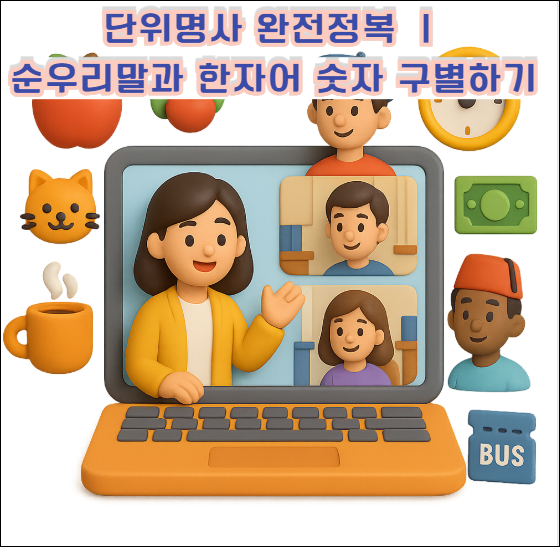
오늘은 온라인 그룹 수업이에요.
Today is an online group lesson.
세 학생이 접속했어요 —
프랑스의 Tom, 캐나다의 Julie, 모로코의 Karim.
Three students logged in —
Tom from France, Julie from Canada, and Karim from Morocco.
지난 두 시간에 순우리말 숫자와 한자어 숫자를 각각 배웠어요.
오늘은 그 두 가지를 합쳐서 단위명사 총정리를 해요.
Over the past two sessions we learned both number systems separately.
Today we put them together — a complete guide to Korean counters.
수업 시작하자마자 Tom이 털어놨어요 —
The moment class started, Tom confessed —
Tom
선생님, 솔직히 말하면… 숫자 두 개를 배웠는데 어디서 어떤 걸 써야 할지 아직도 헷갈려요. 표로 한번에 정리해 주실 수 있어요?
Teacher, honestly… I learned both number systems, but I still get confused about which one to use where. Could you give us a summary chart?
Selly 선생님
완전히 정상이에요! 오늘이 바로 그 날이에요. 단위명사만 보면 어떤 숫자를 써야 하는지 알 수 있어요. 같이 정리해 봐요! 😊
That's completely normal! Today is exactly the day for that. Once you know the counter, you know which number system to use. Let's sort it all out!
Julie
선생님, 제가 어제 "두 시 삼십 분"이라고 했는데 맞아요? 시는 순우리말이고 분은 한자어라고 배웠는데…
Teacher, yesterday I said "두 시 삼십 분" — is that right? I learned that 시 uses native Korean and 분 uses Sino-Korean…
Selly 선생님
완벽해요! 두 시 (순우리말) + 삼십 분 (한자어). 시간이 바로 두 숫자 시스템이 같이 쓰이는 대표적인 예예요. Julie, 정확히 기억하고 있었어요! 👏
Perfect! 두 시 (native Korean) + 삼십 분 (Sino-Korean). Time is the best example of both systems used together. Julie, you remembered it exactly!
Karim
선생님, "번"은요? "세 번 했어요"는 순우리말이에요, 한자어예요?
Teacher, what about "번"? Is "세 번 했어요" native Korean or Sino-Korean?
Selly 선생님
좋은 질문이에요! "번"은 두 가지 뜻이 있어요. 횟수(times)는 세 번 (순우리말), 번호(number)는 삼 번 (한자어). "세 번 했어요"(3번 했다) vs "삼 번 버스"(3번 버스). 다르죠? 😄
Great question! "번" has two meanings. For times/occurrences it's 세 번 (native Korean). For numbers/labels it's 삼 번 (Sino-Korean). "세 번 했어요" (did it 3 times) vs "삼 번 버스" (bus #3). Different!
| 단위명사 |
의미 |
🔴 순우리말 |
🔵 한자어 |
| 개 |
물건 일반
general objects |
두 개사과 두 개two apples |
❌ 사용 안 함 |
| 명 / 분 |
사람
people |
세 명학생 세 명three students |
❌ 사용 안 함 |
| 살 |
나이(구어)
age (spoken) |
스물다섯 살25 years old |
❌ 사용 안 함 |
| 세 |
나이(문어)
age (written) |
❌ 사용 안 함 |
이십오 세25 years old (formal) |
| 잔 |
음료 (컵)
cups of drinks |
두 잔커피 두 잔two coffees |
❌ 사용 안 함 |
| 마리 |
동물
animals |
세 마리고양이 세 마리three cats |
❌ 사용 안 함 |
| 권 |
책
books |
네 권책 네 권four books |
❌ 사용 안 함 |
| 병 |
병
bottles |
한 병물 한 병one bottle of water |
❌ 사용 안 함 |
| 장 |
종이·티켓
flat things |
두 장티켓 두 장two tickets |
❌ 사용 안 함 |
| 시간 |
시간의 양
duration in hours |
두 시간두 시간 걸려요takes two hours |
❌ 사용 안 함 |
| 시 ⏰ |
몇 시 (시각)
o'clock |
두 시two o'clock |
❌ 사용 안 함 |
| 분 ⏰ |
몇 분 (분)
minutes |
❌ 사용 안 함 |
삼십 분thirty minutes |
| 원 |
가격
Korean won |
❌ 사용 안 함 |
오천 원5,000 won |
| 월 |
달 (월)
month |
❌ 사용 안 함 |
삼월March |
| 일 |
날짜
day of month |
❌ 사용 안 함 |
이십일일the 21st |
| 층 |
층 (건물)
floor |
❌ 사용 안 함 |
사 층4th floor |
| 번 (번호) |
번호·노선
number / line |
❌ 사용 안 함 |
사호선Line 4 |
| 번 (횟수) |
횟수
times / occurrences |
세 번three times |
❌ 사용 안 함 |
⏰ 시간이 핵심 예외! | Time Is the Key Example!
시간 말할 때 두 숫자 시스템이 같이 써요!
두 시 삼십 분 = 2:30
열한 시 십오 분 = 11:15
한 시 오십오 분 = 1:55
시 (o'clock) → Native Korean numbers
분 (minutes) → Sino-Korean numbers
This is the most important mixed-system rule in Korean!
다음을 한국어로 말해 보세요! | Try saying these in Korean!
1. 사과 3개 주세요.
→ 사과 세 개 주세요.
Please give me three apples. (순우리말 셋→세)
2. 지금 4시 15분이에요.
→ 지금 네 시 십오 분이에요.
It's 4:15 now. (시=순우리말, 분=한자어)
3. 커피 2잔에 7,500원이에요.
→ 커피 두 잔에 칠천오백 원이에요.
Two coffees are 7,500 won. (잔=순우리말, 원=한자어)
4. 저는 28살이에요.
→ 저는 스물여덟 살이에요.
I'm 28 years old. (살=순우리말)
5. 3층에 있어요.
→ 삼 층에 있어요.
It's on the 3rd floor. (층=한자어)
Tom이 원했던 표를 오늘 완성했어요.
Julie는 시간 말하는 법을 이미 알고 있었고, Karim은 "번"이 두 가지라는 걸 발견했어요.
단위명사는 외워야 해요. 하지만 규칙이 있어요 —
사람·물건·동물을 세는 건 순우리말.
돈·날짜·층·번호는 한자어.
그리고 시간은 둘 다. 😊
Tom finally got the chart he asked for.
Julie already knew how to say time. Karim discovered that "번" has two meanings.
Counters need to be memorized — but there's a pattern:
Counting people, objects, and animals → native Korean.
Money, dates, floors, numbers → Sino-Korean.
And time? Both. 😊